China Best Silicone Rubber Sheet Manufacturer and Supplier
China has become an important sourcing base for industrial elastomer products, including Silicone Rubber Sheet in varied grades, thicknesses, and surface finishes. For buyers, choosing a manufacturer is not just a price comparison. A sheet used beneath a machine may need reliable cushioning, while a gasket near heat may require stable performance across repeated temperature changes. Small differences matter.
A capable supplier should explain material options, tolerances, test methods, and production limits clearly. Ask for a current technical data sheet, sample pieces, and traceable quality records before approving a large order. Check the stated hardness, tensile strength, elongation, and temperature range against actual operating conditions. These figures are useful, but they do not tell the whole story. Installation, compression, cleaning agents, and exposure time can change results. Details matter.
This guide examines how to assess Chinese manufacturers and suppliers, compare product specifications, and reduce avoidable sourcing risks. It also considers communication, customization, lead times, and after-sales support. A polished catalog is not proof of consistent production. Ask practical questions, then compare the answers with samples and documented checks. Even experienced buyers can miss a mismatch when specifications are vague. A careful review takes time, and sometimes the first choice is not the right one. The goal is to find a dependable partner whose material and process fit the application, not simply the lowest quotation.
What Silicone Rubber Sheets Are and Their Essential Properties
Silicone rubber sheets are flat, flexible panels made from cured silicone elastomer. They are supplied in different thicknesses, hardness levels, and surface finishes. A sheet may feel soft and springy, yet resist heat better than many ordinary rubber materials. That difference matters near warm pipes, ovens, or electrical equipment.
Temperature performance is a key property, but the usable range depends on the compound and exposure time. Silicone generally stays flexible in both hot and cold conditions. It also resists sunlight, ozone, and moisture, making it useful for outdoor seals and protective covers. Many grades provide electrical insulation. Others are formulated for specific contact or cleanliness needs, so check the technical data rather than assuming every sheet is suitable. Details matter.
In practical use, thickness affects how a sheet seals, bends, and handles pressure. Softer material can conform to an uneven surface, while harder material may hold its shape more firmly. Tear strength and compression set vary by grade; a gasket that remains compressed for months may not recover as expected. This is easy to miss. Before choosing a sheet, consider temperature, load, movement, and the surfaces it will touch. A small sample test can reveal problems that a specification table cannot.
China Best Silicone Rubber Sheet Manufacturer and Supplier - What Silicone Rubber Sheets Are and Their Essential Properties
| Property or Dimension |
Typical Characteristics |
Why It Matters |
| What silicone rubber sheets are |
Flat sheets made from cured silicone elastomer, available in different thicknesses, hardnesses, colors, and formulations. |
They can be cut or fabricated into gaskets, seals, liners, pads, and protective components. |
| Operating temperature |
Many general-purpose grades are used across approximately −50°C to +200°C (−58°F to +392°F). Formulation and exposure conditions affect the usable range. |
Useful where materials must tolerate heat or cold; confirm the grade’s specified limits for continuous and intermittent service. |
| Hardness |
Commonly available from approximately 20 to 80 Shore A, depending on the compound. |
Softer sheets conform more easily to uneven surfaces, while harder sheets generally resist deformation more strongly. |
| Tensile strength |
Commercial grades often fall in the approximate range of 4–12 MPa; reinforced or specialty compounds may differ. |
Indicates resistance to being pulled apart. The appropriate value depends on the loads and design of the application. |
| Elongation at break |
Many grades offer approximately 150–600% elongation, with results varying by formulation and test method. |
Reflects how far the material can stretch before breaking and helps assess flexibility during installation or use. |
| Tear resistance |
Values vary considerably by compound; many standard grades are in the approximate range of 10–40 kN/m. |
Important when sheets have cut edges, holes, or notches that could initiate tearing. |
| Weather, ozone, and UV resistance |
Silicone generally has good resistance to ozone, sunlight, and outdoor weathering compared with many common elastomers. |
Can support outdoor and exposed applications, though service life depends on grade, temperature, and environmental conditions. |
| Electrical insulation |
Insulating grades typically provide high electrical resistivity. Conductive or antistatic formulations are also available. |
Check the specific electrical data and required standards; not every silicone sheet is designed for insulation. |
| Chemical compatibility |
Often performs well with water and many dilute acids and alkalis. Oils, fuels, and some solvents can cause swelling or deterioration. |
Compatibility should be checked against the actual chemical, concentration, temperature, and exposure time. |
| Food and medical contact |
Special grades may be available for regulated applications, but suitability depends on the formulation and relevant approvals. |
Request documentation for the intended market and application; material type alone does not establish compliance. |
| Available sheet dimensions |
Thickness, width, length, surface finish, and color vary by product and production method. |
Specify dimensions and tolerances based on the finished component and fabrication process. |
| Note: The figures shown are general reference ranges, not guaranteed specifications. Properties vary by silicone formulation, thickness, test method, and service conditions. Consult the product data sheet for a specific grade. |
Common Types, Grades, and Manufacturing Methods
China Best Silicone Rubber Sheet Manufacturer and Supplier
Common Types, Grades, and Manufacturing Methods
Silicone rubber sheets differ in cure system, hardness, and temperature performance. High-temperature-vulcanizing silicone suits durable sheet stock, while liquid silicone rubber is typically molded into precise parts. Room-temperature-vulcanizing grades are useful for sealants and repairs, but are less common as standard sheet products. Small differences matter.
Grades may be selected for general industrial use, electrical insulation, food-contact applications, or medical environments. These labels are not interchangeable certifications. Buyers should check the actual test data, operating temperature, hardness, and relevant compliance documents for the intended use. ISO 1629 identifies silicone elastomers as Q-group rubbers; it does not, by itself, verify a finished sheet’s performance. Fortune Business Insights estimated the global silicone rubber market at USD 8.62 billion in 2023 and projected a 5.3% compound annual growth rate through 2032.
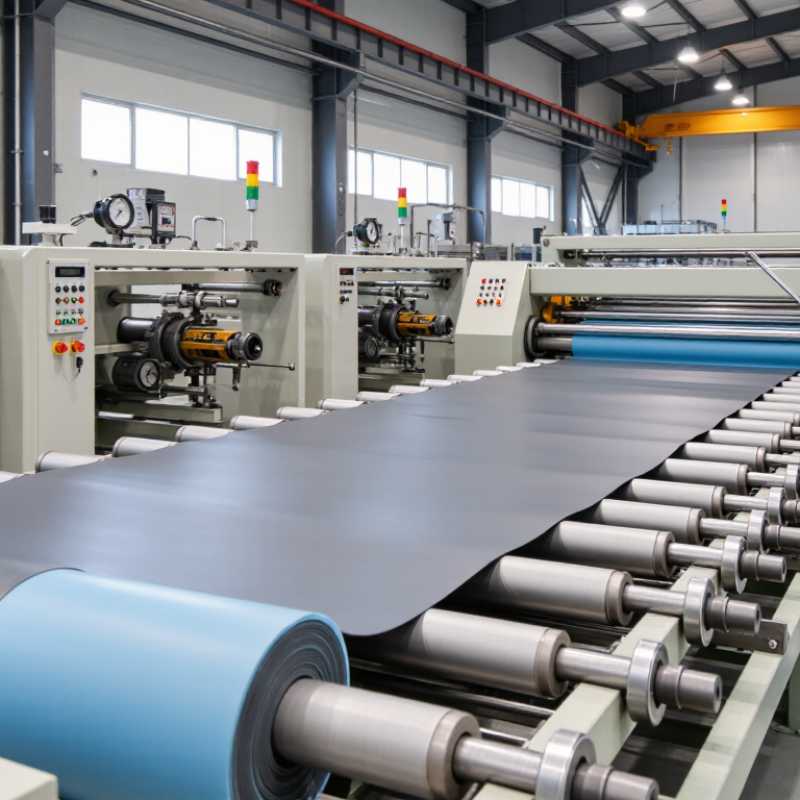
Manufacturers commonly use calendering to form continuous sheets, then cure them through heat-based processes. Compression molding can produce thicker or custom-shaped sheets, while post-curing may reduce residual volatiles and stabilize properties. Peroxide and platinum systems are both used, depending on formulation and application. A practical detail: edges, thickness variation, and surface texture can affect sealing just as much as the headline grade. Even experienced buyers sometimes overlook those details.
Major Applications Across Industries
China Best Silicone Rubber Sheet Manufacturer and Supplier
Major Applications Across Industries
Silicone rubber sheets are used where flexibility, insulation, and resistance to heat are important. In food-processing equipment, suitable grades can form gaskets around ovens, mixers, and washdown areas. Electrical and electronics manufacturers use sheets for insulating pads and protective barriers. The exact grade matters. Heat matters.
In automotive and machinery settings, sheets may cushion vibration, seal access panels, or protect components from moisture and dust. Medical and laboratory equipment can also use carefully specified silicone parts, where cleanliness and consistent material performance are essential. Applications vary, so a sheet should be selected for its actual contact conditions, thickness, hardness, and temperature range. A datasheet is a useful starting point, not a substitute for testing in the finished assembly.
For buyers working with a manufacturer or supplier, clear requirements help prevent avoidable fit problems. Share operating temperatures, compression needs, and exposure to oils or cleaning agents. A mismatch can look minor on a sample and become costly after installation. It is easy to focus on heat resistance alone; in practice, sealing pressure and repeated movement deserve equal attention.
China’s Silicone Rubber Sheet Manufacturing Landscape
China Best Silicone Rubber Sheet Manufacturer and Supplier
China’s silicone rubber sheet manufacturing landscape reflects a wider shift toward durable, heat-resistant materials. Grand View Research estimated the global silicone market at about USD 18.3 billion in 2023 and projected a 6.2% compound annual growth rate from 2024 to 2030. This figure covers silicone products broadly, not rubber sheets alone. It signals demand, but cannot measure China’s sheet output by itself.
Chinese producers serve varied needs, from thin insulating sheets to thicker sealing pads. Production quality depends on more than the mixing line. Technicians check compound consistency, cure conditions, thickness, and Shore A hardness; small changes can affect compression and edge quality. Small details matter. For buyers, useful checks include requesting batch test records and confirming tolerances against actual drawings. Ask how samples compare with routine production, not only laboratory prototypes.
The landscape is diverse, and supplier capabilities can differ sharply. Some factories focus on standard rolls, while others handle custom colors, surface finishes, or cut-to-size parts. Those options do not guarantee stable quality. A practical assessment should examine traceability, inspection methods, and whether test results match the intended operating temperature. Data is imperfect, too: public reports rarely separate silicone sheets from the broader materials market. That gap deserves attention when comparing capacity claims.
How to Evaluate a Manufacturer and Supplier in China
China Best Silicone Rubber Sheet Manufacturer and Supplier
How to Evaluate a Manufacturer and Supplier in China
A dependable supplier should explain how each sheet is made and tested, not just quote a low price. Ask for technical data covering hardness, thickness tolerance, tensile strength, and operating temperature. Request the test methods and results for the actual grade you plan to buy. Ask for evidence.
Compare samples under realistic conditions. Measure thickness at several points with a caliper, then check whether the sheet bends, recovers, and cuts consistently. If the material will contact oil, heat, or outdoor conditions, describe that use clearly. A sample that looks smooth may still perform poorly after repeated compression.
Review quality controls, batch identification, and how complaints are investigated. Ask whether production records can link a delivered roll to its material batch and inspection results. A factory visit or live video walkthrough can help verify equipment and storage practices, but it cannot prove every claim. Independent testing may be worthwhile for critical applications. Be cautious of vague answers, unusually broad performance claims, or specifications that change between the quotation and sample. Even a careful evaluation has limits; one test cannot predict every condition in service.